Introduction
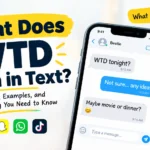
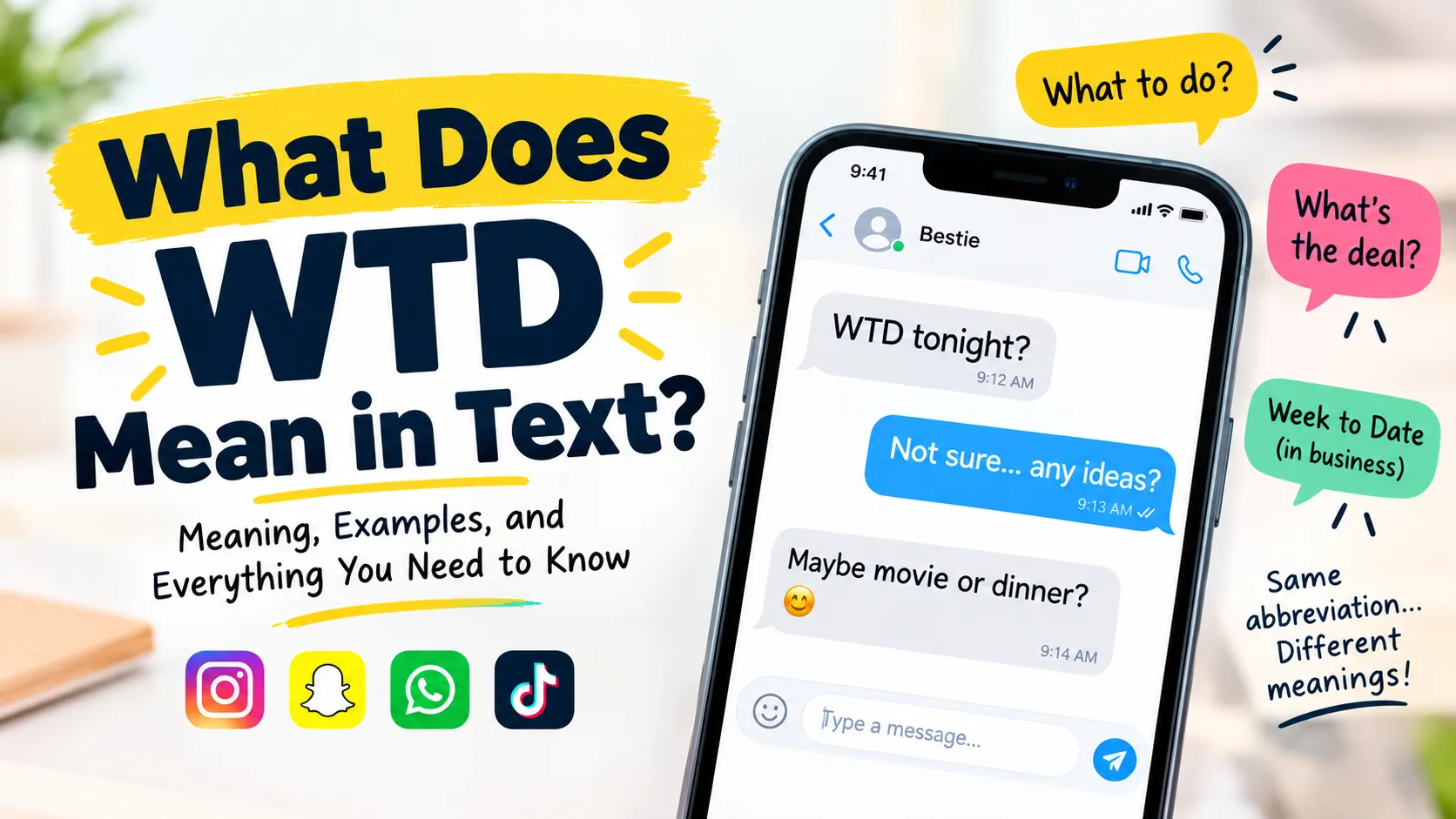
WTD Meaning in Text: Have you received a message that simply says “WTD?” and wondered what the sender means? This short abbreviation can be confusing because its meaning changes with the conversation.
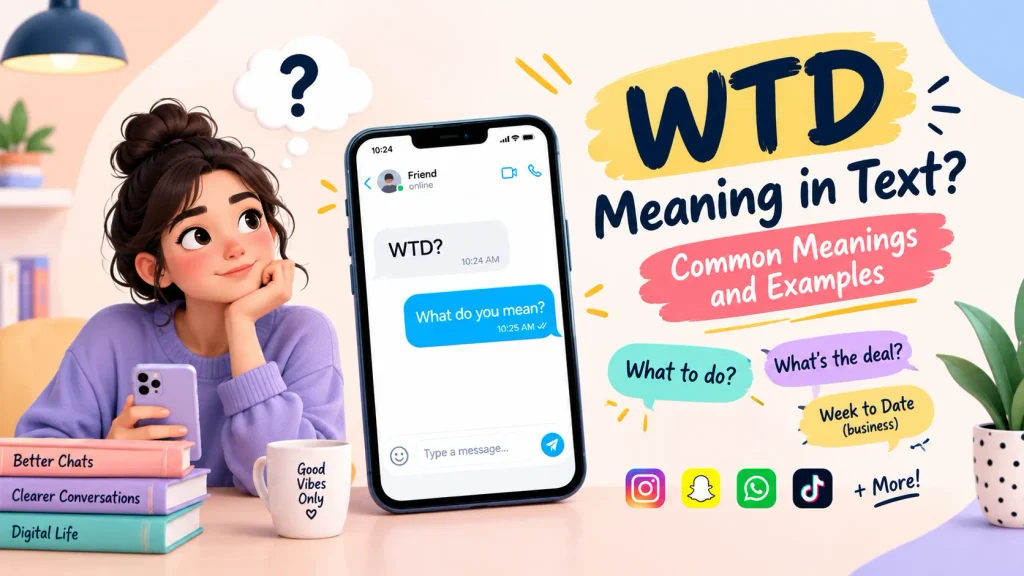
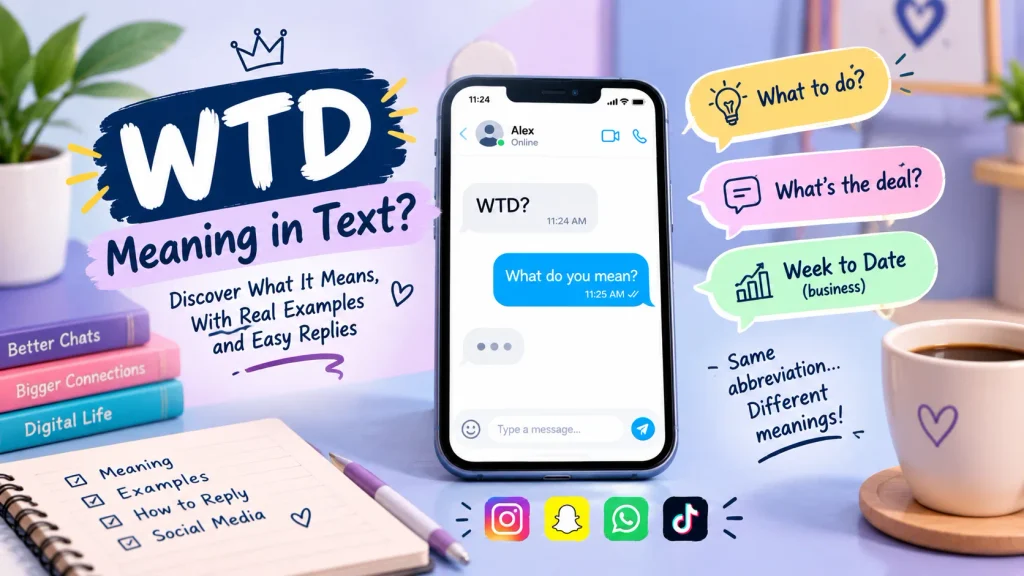
WTD most commonly means “What to do” in casual texting. People use it when they need advice, want suggestions, or are trying to decide what to do next. It can also mean “What’s the deal?” when someone wants to understand a situation or ask for an explanation. Dictionary.com documents the “What to do” interpretation, while social-media references also describe the alternative meaning.
What Does WTD Mean in Text?
- WTD commonly means “What to do” in casual text messages.
- People use WTD when they need advice or suggestions.
- The abbreviation is often used when making plans.
- WTD can help people ask what to do next.
- Friends may use WTD when they feel confused.
- Someone might write WTD to ask for help with a decision.
- The abbreviation can appear in social media messages.
- WTD may be used when discussing unexpected situations.
- In some contexts, WTD can mean “What’s the deal?”
- Its intended meaning depends on the surrounding conversation.
- WTD may appear on Snapchat, Instagram, and WhatsApp.
- People use it to communicate quickly in casual chats.
- WTD is generally informal texting shorthand.
- It does not automatically indicate anger or romantic interest.
- Reading the complete message helps clarify how WTD is being used.
What Does WTD Stand For?
- WTD commonly stands for “What to do” in casual texting.
- People use this meaning when asking for advice or ideas.
- “What’s the deal?” is another reported interpretation of WTD.
- The phrase “What to do” usually relates to plans or decisions.
- “What’s the deal?” usually asks for an explanation.
- The intended meaning depends on the topic being discussed.
- WTD can have different meanings in professional settings.
- In business reports, WTD can mean “Week to Date.”
- Week to date refers to Figures collected during the current week.
- Business usage differs from casual internet slang.
- The surrounding words can help identify the correct meaning.
- Not every expansion of WTD is equally common in texting.
- People may interpret WTD differently across online communities.
- Asking for clarification can prevent misunderstandings.
- Understanding the context makes WTD easier to interpret.
How to Tell Which WTD Meaning Fits
- The surrounding words help reveal what WTD means.
- Messages about plans often suggest “What to do.”
- Questions about unexpected situations may suggest “What’s the deal?”
- A message about free time may ask for activity ideas.
- A question about a sudden change may request an explanation.
- Business reports may use WTD to mean “Week to Date.”
- The topic of the conversation provides useful clues.
- The sender’s previous messages can help clarify the meaning.
- Punctuation may provide additional context.
- Short messages can sometimes have more than one interpretation.
- Informal texting does not follow one universal abbreviation rule.
- Social media communities may use slang differently.
- The same abbreviation can have different meanings in different settings.
- You should avoid assuming a meaning without enough context.
- Asking the sender what they mean is always an option.
How Is WTD Used in Text Messages?
- People use WTD to ask what they should do next.
- Friends may write WTD when making weekend plans.
- Someone might use WTD when facing a difficult decision.
- WTD can help people ask for quick suggestions.
- The abbreviation may appear when plans suddenly change.
- People sometimes use WTD when they feel uncertain.
- WTD can introduce a question about an unexpected event.
- Friends may use it to discuss activities together.
- Someone might ask WTD when they need practical advice.
- The abbreviation can make casual messages shorter.
- WTD may appear in individual chats and group conversations.
- People sometimes use it to ask for clarification.
- Its tone can be friendly, neutral, or confused.
- WTD is usually more suitable for informal communication.
- The complete message helps explain the sender’s intention.
Meaning on Snapchat
- WTD can mean “What to do” in Snapchat messages.
- Friends may use WTD when discussing plans.
- Someone might send WTD to ask for activity suggestions.
- The abbreviation can appear in Snapchat chats and replies.
- WTD may be used when plans suddenly change.
- A friend might ask WTD when feeling bored.
- Some users may interpret WTD as “What’s the deal?”
- Questions about a situation may suggest the alternative meaning.
- Snapchat does not give WTD one universal official meaning.
- The sender’s message helps determine the intended interpretation.
- WTD can be used in casual conversations between friends.
- People may use it to communicate quickly.
- Its meaning can vary between online communities.
- WTD does not automatically indicate flirting.
- Asking for clarification can help when the message is unclear.
WTD Meaning on Instagram
- WTD can mean “What to do” in Instagram direct messages.
- People may use it when discussing plans with friends.
- The abbreviation can appear in casual Instagram conversations.
- Someone might write WTD when asking for suggestions.
- WTD may be used to discuss an unexpected situation.
- Some conversations may use WTD to mean “What’s the deal?”
- The surrounding message helps clarify the intended meaning.
- Instagram users may use WTD in group chats.
- The abbreviation can make informal messages shorter.
- WTD may appear in replies to stories or posts.
- People can use it when they need advice.
- The meaning depends on the conversation rather than the platform alone.
- WTD is not an official Instagram feature or command.
- Its use does not automatically suggest romantic interest.
- Reading the complete message helps avoid confusion.
Meaning on WhatsApp and Other Messaging Apps
- WTD commonly appears as informal shorthand in messaging apps.
- People may use it to ask what to do next.
- Friends can write WTD when making plans.
- Someone might use it to request advice.
- WTD may appear in WhatsApp group chats.
- The abbreviation can also be used in ordinary SMS messages.
- Discord users may use WTD in casual conversations.
- Facebook messages may include WTD when discussing plans.
- The meaning depends on the topic being discussed.
- WTD can refer to a decision or an activity.
- In some Conversations, it may ask for an explanation.
- Business-related messages may use WTD differently.
- People should not assume every messaging community uses it identically.
- Asking a follow-up question can clarify the meaning.
- Context is the most useful guide to interpreting WTD.
WTD Examples in Everyday Conversations
- “I’m bored. WTD?” asks what to do.
- “We’re free tonight. WTD?” asks for activity ideas.
- “My plans got canceled. WTD now?” requests advice.
- “I have two choices. WTD?” asks for help deciding.
- “WTD about the assignment?” asks what action to take.
- “WTD with the new plan?” may request an explanation.
- “WTD with the sudden change?” asks what is happening.
- “Everyone is available Saturday. WTD?” suggests planning together.
- “I missed the bus. WTD?” asks for a practical solution.
- “WTD about our booking?” asks what should happen next.
- “WTD with those new rules?” may request clarification.
- “Nothing planned today. WTD?” invites suggestions.
- “Check the WTD sales report” uses the business meaning.
- These examples show how context affects interpretation.
- Reading the full message helps you understand the intended meaning.
How to Reply to WTD in Text
- Suggest an activity if the sender wants ideas.
- Offer practical advice if the sender faces a problem.
- Ask what they prefer when making plans together.
- Suggest meeting for coffee or watching a movie.
- Help the sender compare their options.
- Ask for more details before giving advice.
- Explain the situation if they mean “What’s the deal?”
- Provide an update when they ask about a change.
- Say “Let’s figure it out together” to offer support.
- Ask “What do you mean by WTD?” if you are confused.
- Keep your reply friendly and natural.
- Match your response to the conversation’s tone.
- Avoid assuming the sender is upset without evidence.
- You do not need to use abbreviations in your reply.
- A clear answer can prevent further misunderstanding.
Is WTD Rude or Offensive?
- WTD is not inherently rude or offensive.
- People commonly use it in casual conversations.
- The abbreviation can express uncertainty without being disrespectful.
- A short message may sometimes sound abrupt.
- The surrounding conversation helps explain its tone.
- “WTD tonight?” can be a simple request for suggestions.
- A tense conversation may make the same abbreviation sound impatient.
- WTD does not automatically mean the sender is angry.
- The sender’s communication style can affect how it feels.
- Different people may interpret short messages differently.
- Adding context can make a question sound more considerate.
- A complete sentence may be clearer than an abbreviation.
- You should avoid judging someone’s intention from WTD alone.
- Asking what the sender means can resolve confusion.
- Context matters more than the abbreviation by itself.
Related to Other Article: https://blesssprout.com/nmms-meaning-in-text/
Is WTD Formal or Informal?
- WTD is generally used as informal texting shorthand.
- Friends may use it in everyday conversations.
- The abbreviation is common in casual digital communication.
- WTD is usually less suitable for formal emails.
- Writing the complete question can improve clarity at work.
- “What should we do?” is clearer in professional communication.
- Business reports may use WTD to mean “Week to Date.”
- The business meaning differs from casual texting usage.
- Readers should consider the document’s subject.
- Informal abbreviations may confuse people unfamiliar with them.
- Formal writing usually benefits from clear wording.
- WTD can be appropriate when its meaning is understood.
- Professional messages should avoid unnecessary ambiguity.
- The intended audience can influence your choice of wording.
- Using the full phrase is often the safest option.
WTD vs. WYD, WTF, WDYT, and IDK
- WTD commonly means “What to do” in casual texting.
- WYD means “What are you doing?”
- WTF expresses surprise, disbelief, or frustration.
- WDYT means “What do you think?”
- IDK means “I don’t know.”
- WBY means “What about you?”
- WTD often asks for a plan or next step.
- WYD asks about someone’s current or planned activity.
- WTF can be considered vulgar or inappropriate in formal settings.
- WDYT invites another person’s opinion.
- IDK expresses uncertainty or a lack of knowledge.
- WBY returns a question to the other person.
- These abbreviations serve different conversational purposes.
- Their similar appearance can sometimes be confusing.
- Understanding each abbreviation helps you respond appropriately.
Does WTD Mean Something Different From a Guy or a Girl?
- WTD has no universally recognized gender-specific meaning.
- Guys may use WTD to ask for suggestions or advice.
- Girls may use WTD for the same general purposes.
- Someone might use WTD when making plans.
- The abbreviation can be used in friendly conversations.
- WTD does not automatically indicate romantic interest.
- A message about tonight may suggest plans rather than flirting.
- The relationship between the people can provide context.
- Previous messages may help explain the sender’s intention.
- Gender alone does not determine the abbreviation’s meaning.
- People use texting shorthand according to personal habits.
- The same abbreviation can serve different purposes in different conversations.
- You should avoid assuming hidden feelings from WTD alone.
- A direct question can clarify someone’s intention.
- The complete conversation is more informative than the abbreviation by itself.
Related to Other Article: https://blesssprout.com/ootd-meaning-in-text/
Common Misunderstandings About WTD
- WTD does not always have the same meaning.
- “What to do” is a common texting interpretation.
- “What’s the deal?” is another reported slang interpretation.
- WTD should not be confused with WYD.
- A short message does not automatically indicate anger.
- Business usage may differ from internet slang.
- Not every reported expansion is equally common.
- The sender’s topic can help clarify the meaning.
- Punctuation alone cannot establish the intended interpretation.
- Different online communities may use abbreviations differently.
- WTD does not automatically suggest romantic interest.
- A message about plans often calls for suggestions.
- A question about an event may call for an explanation.
- Readers should avoid assuming an undocumented origin.
- Asking for clarification can prevent misunderstandings.
People Also Ask
A: WTD commonly means “What to do” in casual texting. It can also mean “What’s the deal?” when someone wants an explanation or update. The surrounding message helps identify the intended meaning.
A: On Snapchat, WTD may mean “What to do” when discussing plans or “What’s the deal?” when asking about a situation. These are informal uses rather than separate official Snapchat definitions.
A: It usually means “What should we do tonight?” The sender may be asking for suggestions about activities, places to go, or plans to make together.
A: “IDK WTD” means “I don’t know what to do.” It expresses uncertainty and may indicate that the sender wants advice or help deciding what to do next.
A: Yes. Some online slang references document WTD as “What’s the deal?” In this context, it asks what is happening or requests clarification about a situation.
Conclusion
WTD most commonly means “What to do” in casual text messages when someone wants advice, Suggestions, or a plan. It can also mean “What’s the deal?” when someone asks what is happening or seeks an explanation. In professional reports, WTD may mean “week to date.”
The surrounding words and conversation topic are the most useful clues to the intended meaning. If a message remains unclear, asking the sender to explain is better than making assumptions.
Explore more texting abbreviation guides on BlessSprout to understand everyday digital conversations and respond with confidence.