Introduction
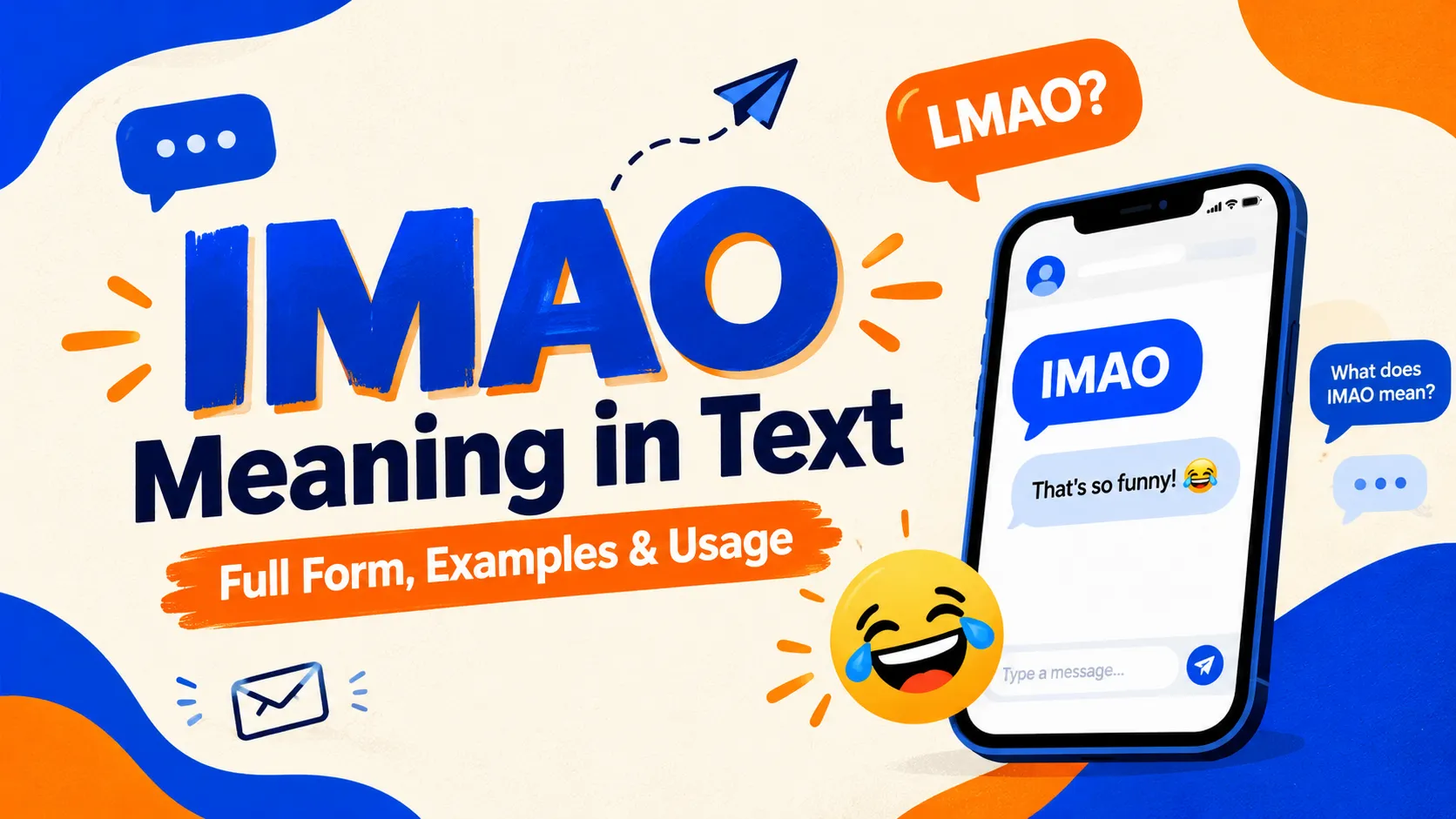
IMAO Meaning in Text: Have you received a message containing “IMAO” and wondered what the sender meant? Understanding internet slang can make online conversations much easier to follow.
IMAO meaning in text is “In My Arrogant Opinion.” People use this abbreviation to Introduce a personal opinion with exaggerated confidence, irony, or humor. However, IMAO can also appear as a typo for LMAO, which means “Laughing My Ass Off.” The sentence and conversation usually help you determine the intended meaning.
In this guide, you’ll discover what IMAO stands for, how people use it in text messages and social media comments, whether it sounds rude, and how to reply naturally. You’ll also learn the difference between IMAO, IMO, IMHO, and LMAO.
What Does IMAO Mean in Text?
- IMAO commonly stands for “In My Arrogant Opinion.”
- People use IMAO to introduce their personal opinions.
- The abbreviation is common in informal online communication.
- It can express playful confidence or exaggerated certainty.
- Some people use it to make humorous statements.
- IMAO can introduce an opinion about movies or music.
- People may use it when discussing food or hobbies.
- The word “arrogant” adds an ironic tone to the phrase.
- IMAO does not always mean someone is genuinely arrogant.
- Friends may use it during lighthearted conversations.
- The abbreviation can appear in text messages.
- People may also use it in online comments.
- Its tone depends on the surrounding conversation.
- IMAO is different from LMAO, which expresses laughter.
- Reading the full message helps identify the intended meaning.
What Is the Full Form of IMAO?
- IMAO stands for “In My Arrogant Opinion.”
- The letter I represents the word “In.”
- The letter M represents the word “My.”
- The letter A represents the word “Arrogant.”
- The letter O Represents the word “Opinion.”
- The phrase introduces a personal viewpoint.
- It can make an opinion sound playfully confident.
- People may use it to exaggerate their certainty.
- The abbreviation is informal internet slang.
- It is generally used in casual conversations.
- IMAO may appear before a strong personal judgment.
- The phrase can also be used sarcastically.
- It does not mean every reader must agree.
- Its tone may vary depending on the topic.
- Understanding the full form makes the abbreviation easier to interpret.
How Is IMAO Used in Text Messages?
- People use IMAO when sharing personal opinions.
- It can introduce a preference about movies or music.
- Friends may use it during casual discussions.
- Some people use it to express exaggerated confidence.
- IMAO can make a statement sound humorous.
- It may appear in conversations about food.
- People can use it when discussing video games.
- The abbreviation may introduce a recommendation.
- It can appear during friendly online debates.
- Some writers use it to express irony.
- IMAO may introduce a strongly worded opinion.
- It can make an ordinary statement sound playful.
- The abbreviation is not usually appropriate for formal writing.
- Its meaning remains connected to expressing an opinion.
- The surrounding words help clarify the writer’s intention.
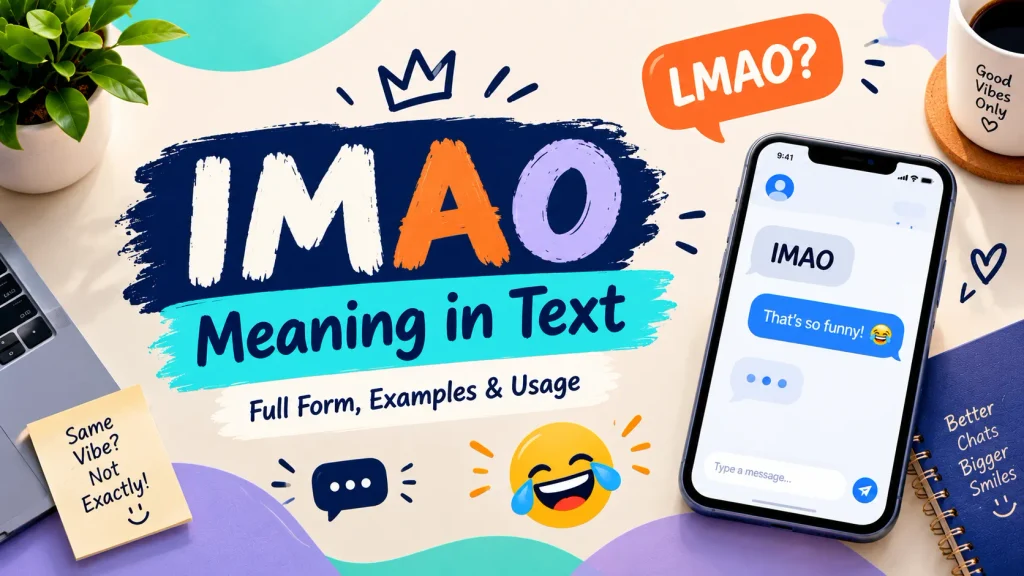
IMAO vs. LMAO: What’s the Difference?
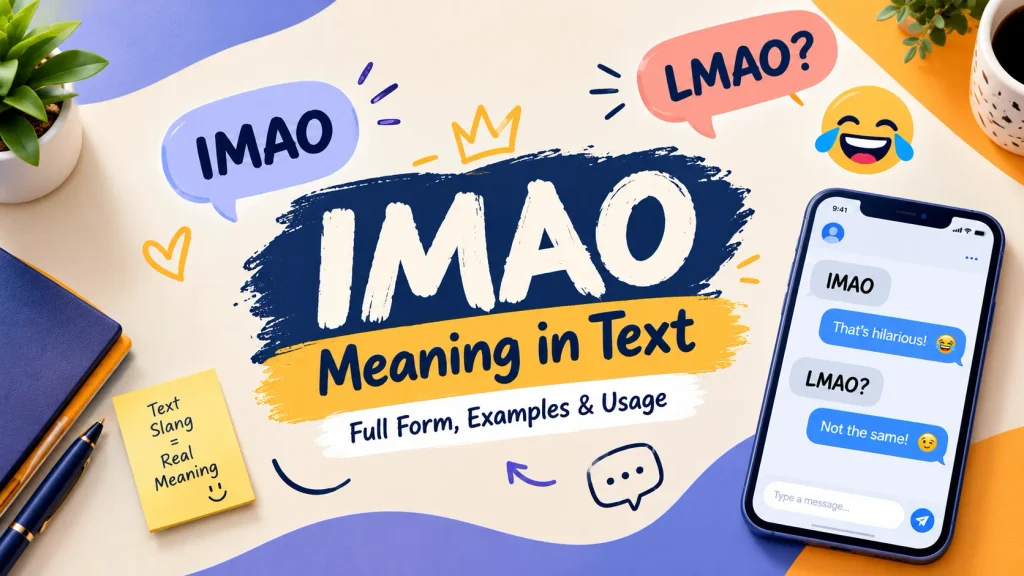
- IMAO means “In My Arrogant Opinion.”
- LMAO means “Laughing My Ass Off.”
- IMAO introduces a personal viewpoint.
- LMAO expresses strong amusement.
- People use IMAO when sharing opinions.
- People use LMAO when reacting to something funny.
- IMAO can communicate playful confidence.
- LMAO commonly communicates laughter.
- The two abbreviations have different established meanings.
- Their letters can look similar in certain fonts.
- Some people may accidentally confuse IMAO with LMAO.
- A funny message containing IMAO could include a typing mistake.
- An opinion-based sentence may support the IMAO interpretation.
- A humorous reaction may suggest that LMAO was intended.
- Reading the complete message helps distinguish the abbreviations.
IMAO vs. IMO vs. IMHO
- IMAO means “In My Arrogant Opinion.”
- IMO means “In My Opinion.”
- IMHO means “In My Humble Opinion.”
- All three abbreviations can introduce personal viewpoints.
- IMO is a straightforward way to express an opinion.
- IMHO often presents an opinion modestly.
- IMAO can exaggerate the writer’s confidence.
- People use IMO in casual discussions.
- IMHO may appear when someone offers a suggestion.
- IMAO can appear during humorous debates.
- The word “arrogant” gives IMAO a distinctive tone.
- The word “humble” gives IMHO a different tone.
- These abbreviations are not completely interchangeable.
- Their intended tone depends on the surrounding conversation.
- Understanding their full forms helps prevent confusion.
Meaning on WhatsApp, Instagram, TikTok, and Other Platforms
- IMAO generally keeps the same meaning across social platforms.
- WhatsApp users may use it in private messages.
- Friends may use IMAO in group chats.
- Instagram users may include it in comments.
- TikTok users may use it when discussing videos.
- Snapchat users may use it during casual conversations.
- Facebook users may include it in opinion-based discussions.
- Reddit users may use it in discussion threads.
- Discord users may use it while chatting about games.
- People may use it when discussing entertainment.
- The abbreviation can introduce a personal preference.
- It may appear in humorous online debates.
- The platform alone does not determine its meaning.
- The Surrounding topic helps explain the intended tone.
- IMAO does not automatically have a different definition on each app.
Is IMAO Rude or Sarcastic?
- IMAO is not automatically rude.
- The abbreviation can be used humorously.
- Some people use it to exaggerate their confidence.
- It may communicate irony in casual conversations.
- Friends may use it to joke about their opinions.
- The word “arrogant” can make the phrase sound sarcastic.
- Some readers may interpret it as dismissive.
- Its tone depends on the complete message.
- A friendly conversation may make the phrase seem playful.
- A heated disagreement may make it sound confrontational.
- IMAO does not necessarily indicate genuine arrogance.
- It does not automatically mean the sender is angry.
- The relationship between the speakers can affect interpretation.
- Clear wording can prevent misunderstandings.
- Readers should consider context before judging the sender’s tone.
How to Reply When Someone Says IMAO
- You can agree if you share the same opinion.
- You can politely disagree with the sender.
- You can ask what the person means.
- You can respond with a lighthearted joke.
- You can ask the sender to explain their reasoning.
- You can acknowledge their opinion without agreeing.
- You can use “Fair point” to recognize their perspective.
- You can say “Honestly, I agree” when appropriate.
- You can reply “Interesting take” to continue the discussion.
- You can say “Very humble of you” as a joke.
- You can ask whether they intended to type LMAO.
- You can keep your response short and casual.
- Your reply should match the conversation’s tone.
- A serious discussion may require a respectful response.
- You do not need a special reply for every abbreviation.
When Should You Use IMAO?
- IMAO is best suited to informal conversations.
- Friends may use it when sharing personal opinions.
- It can introduce a humorous statement.
- People may use it during friendly debates.
- It can express confidence about personal preferences.
- The abbreviation may suit discussions about movies.
- It can be used when talking about music.
- People may use it when discussing hobbies.
- It can add personality to casual online messages.
- Readers should understand the phrase before using it.
- IMAO may be misunderstood by unfamiliar audiences.
- It is generally unsuitable for formal business emails.
- Academic writing usually benefits from standard language.
- Serious discussions may require clearer wording.
- “In my opinion” is a suitable alternative in professional communication.
Related to Other Article: https://blesssprout.com/definition-of-seduced/
Origin and History of IMAO
- IMAO is an established internet abbreviation.
- Its full form is “In My Arrogant Opinion.”
- The phrase is related to the expression IMHO.
- IMHO stands for “In My Humble Opinion.”
- IMAO changes the modest tone by using “arrogant.”
- The phrase can communicate exaggerated confidence.
- Dictionary.com documents an early example from May 1989.
- The example appeared in a Usenet discussion.
- Usenet was an early system for online discussions.
- The abbreviation was used to express a personal viewpoint.
- Its wording can create a humorous effect.
- The phrase developed within informal online communication.
- IMAO has a documented history in internet slang.
- It is sometimes confused with the abbreviation LMAO.
- Historical claims should be based on reliable language references.
Common Misunderstandings About IMAO
- Some people mistakenly assume IMAO always means laughter.
- Its established meaning is “In My Arrogant Opinion.”
- LMAO is the abbreviation associated with strong amusement.
- IMAO is not automatically an insult.
- The word “arrogant” may be used humorously.
- The abbreviation does not guarantee a sarcastic tone.
- Its meaning does not automatically change across social platforms.
- IMAO does not inherently indicate romantic interest.
- It does not reveal the sender’s feelings by itself.
- Some uses may result from typing mistakes.
- Not every alternative expansion is an established definition.
- Context helps distinguish opinions from reactions to humor.
- The complete sentence is more informative than the abbreviation alone.
- Readers should avoid making assumptions without sufficient context.
- Asking for clarification can resolve uncertainty.
Related Terms and Similar Internet Slang
- IMO means “In My Opinion.”
- IMHO means “In My Humble Opinion.”
- LMAO means “Laughing My Ass Off.”
- LMFAO is a stronger informal laughter abbreviation.
- LOL means “Laughing Out Loud.”
- TBH means “To Be Honest.”
- FYI means “For Your Information.”
- IIRC means “If I Recall Correctly.”
- These abbreviations appear in online communication.
- Some introduce opinions or personal viewpoints.
- Others express laughter or amusement.
- TBH can introduce a candid statement.
- FYI is commonly used to share information.
- Each abbreviation has its own established meaning.
- Understanding related slang makes text conversations easier to follow.
Related to Other Article: https://blesssprout.com/otp-meaning-in-text/
People Also Ask
A: IMAO usually means “In My Arrogant Opinion.” It is an informal abbreviation used to introduce an opinion with playful confidence, irony, or exaggerated certainty.
A: IMAO stands for “In My Arrogant Opinion.” The letters represent In, My, Arrogant, and Opinion.
A: No. IMAO means “In My Arrogant Opinion,” whereas LMAO means “Laughing My Ass Off.” One introduces an opinion; the other expresses amusement.
A: Not in its established slang definition. If someone uses IMAO in a message about something funny, they may have intended to type LMAO instead.
A: Not necessarily. It can be playful or ironic, but it may sound arrogant or dismissive during a disagreement. The context and the sender’s tone help determine how it comes across.
Final Thoughts
The main IMAO meaning in text is “In My Arrogant Opinion.” People use this internet abbreviation to express a personal viewpoint with playful confidence, irony, or exaggerated certainty.
The most important distinction is between IMAO and LMAO. IMAO introduces an opinion, while LMAO expresses amusement. Because the letters can look similar in certain fonts, context is useful when interpreting an unfamiliar message.
Now that you understand the full form, examples, tone, and common replies, you can interpret IMAO more confidently in text messages, social media comments, and online Discussions.