Introduction
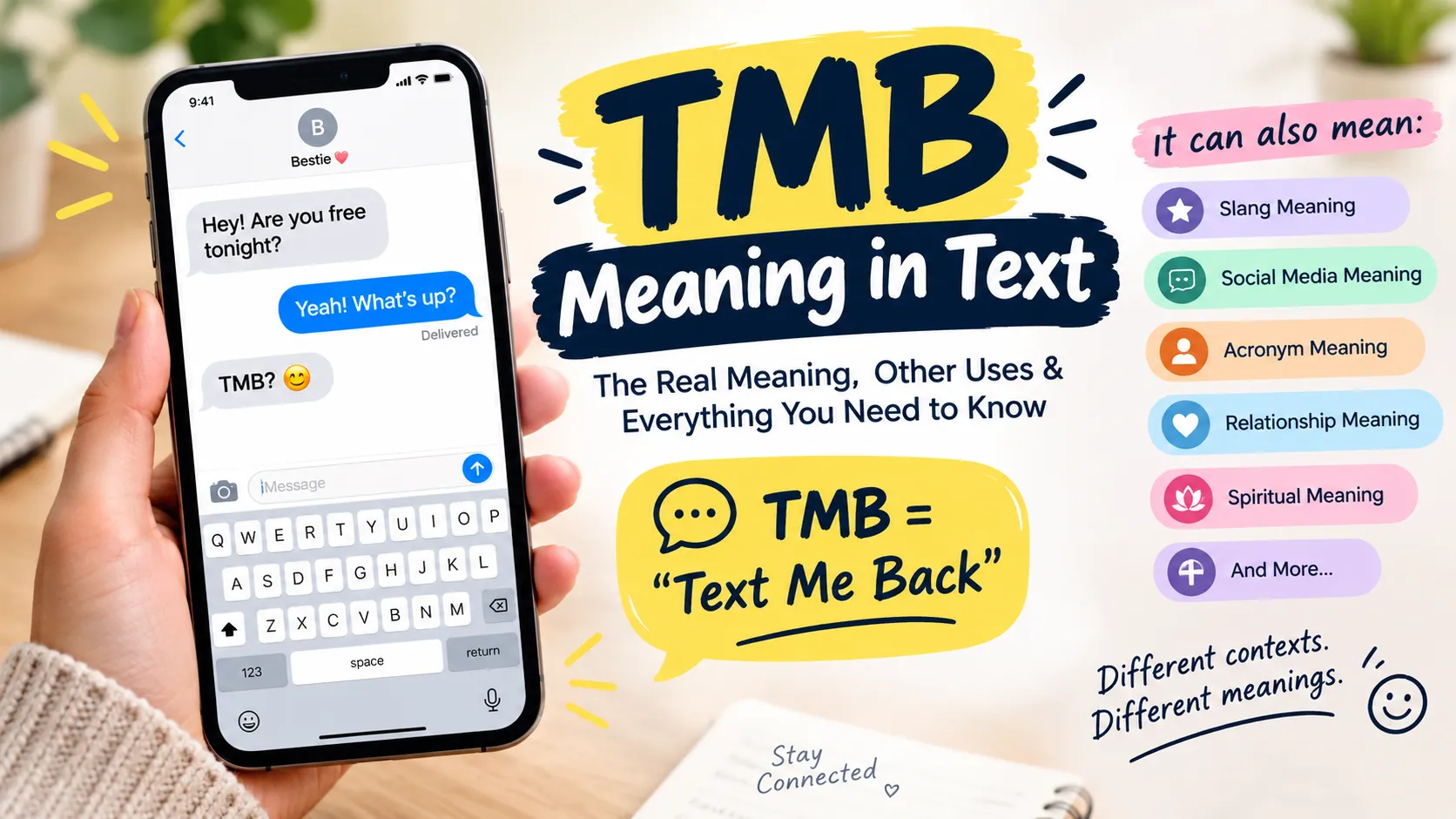
TMB Meaning in Text: If someone sends you TMB in a text message, it usually means “Text Me Back.” It is an informal abbreviation used to ask someone to reply to a message, continue a conversation, or get in touch later. For example, “TMB when you’re free” means “Text me back when you’re free.”
However, the meaning can change with context. In a social media conversation, TMB might refer to “Tag Me Back” or, in an older Twitter-related context, “Tweet Me Back.” In a Spanish-Language message, lowercase tmb commonly abbreviates también, meaning “also” or “too.” These interpretations are not interchangeable, so the surrounding words matter.
If you are trying to understand a message from a friend, someone you like, or a person on Snapchat or Instagram, the easiest approach is to consider what the sender was discussing. Were they waiting for your answer, asking to be tagged in a photo, or speaking Spanish? That clue will usually help you interpret the abbreviation.
What Does TMB Mean in Text?
- TMB commonly means “Text Me Back” in casual texting.
- People use TMB to ask someone to reply to a message.
- The abbreviation makes texting quicker and easier.
- TMB is often used in informal conversations.
- Friends may use TMB when waiting for a response.
- Someone might write TMB after sending an important message.
- TMB can appear in private chats and text messages.
- People may use it when a conversation pauses.
- The abbreviation can encourage someone to continue chatting.
- TMB is commonly understood through its surrounding context.
- Some people use TMB on social media.
- Its tone depends on the relationship between the sender and receiver.
- TMB may sound friendly in casual conversations.
- It does not always indicate urgency or frustration.
- Reading the complete message helps clarify its meaning.
Quick Meaning Summary
- TMB commonly stands for “Text Me Back.”
- It usually asks someone to reply to a message.
- TMB is an informal texting abbreviation.
- People often use it with friends and family.
- It can appear in SMS messages and online chats.
- The abbreviation can save typing time.
- TMB may be used when someone is waiting for a reply.
- Its tone can be friendly or direct.
- It may sound impatient in certain situations.
- The sender’s wording can affect its meaning.
- TMB may have other meanings in specific contexts.
- Some people use it differently on social media.
- The surrounding conversation helps identify the intended meaning.
- TMB is not generally suitable for formal writing.
- “Text Me Back” is the main meaning discussed in casual texting.
What Does TMB Stand For?
- TMB commonly stands for “Text Me Back.”
- The letter T represents “Text.”
- The letter M represents “Me.”
- The letter B represents “Back.”
- The phrase asks someone to send a reply.
- People use it to shorten a common request.
- TMB is often typed in casual conversations.
- It can be used after sending a question.
- Someone may write TMB when they need an answer.
- Friends may use it when arranging plans.
- The abbreviation is easy to type on a phone.
- TMB can appear in Uppercase letters.
- Some people may write it as “tmb.”
- The intended meaning can depend on the conversation.
- “Text Me Back” is the most relevant interpretation in ordinary texting.
How Is TMB Used in Text Messages?
- TMB is used to ask someone to reply.
- People may send it after leaving a message.
- Friends can use TMB during casual conversations.
- Someone might use it when waiting for an answer.
- It can follow a question that needs a response.
- TMB may be used when making plans.
- People sometimes use it to continue a conversation later.
- It can appear in messages between family members.
- The abbreviation may be used in conversations between partners.
- TMB can make a message shorter.
- Some people use it with a smiley emoji.
- Others may use it when a response is important.
- The tone depends on the surrounding words.
- It can sound direct without necessarily being rude.
- The receiver can use the context to understand the request.
What Does TMB Mean From a Guy?
- TMB commonly means “Text Me Back” when sent by a guy.
- He may be asking you to reply to his message.
- He might be waiting for an answer to a question.
- He may want to continue the conversation.
- He could be discussing plans that need confirmation.
- TMB may appear in an ordinary friendly chat.
- A guy might use it when he has something else to ask.
- He may send it after sharing important information.
- The abbreviation can sound casual between friends.
- It may sound direct if the conversation is serious.
- TMB does not automatically mean he is angry.
- It does not necessarily indicate romantic interest.
- His usual Texting style can help explain the tone.
- The surrounding messages provide useful context.
- Consider the complete conversation before interpreting his intention.
What Does TMB Mean From a Girl?
- TMB commonly means “Text Me Back” when sent by a girl.
- She may be asking you to respond to her message.
- She might be waiting for an answer.
- She may want to continue an ongoing conversation.
- TMB can be used between friends.
- It may appear in a conversation about plans.
- She could use it after asking an important question.
- The abbreviation may help her send a quick reminder.
- It can sound friendly in a casual conversation.
- It may sound direct when a response is needed.
- TMB does not automatically mean she is upset.
- It does not necessarily mean she is flirting.
- Her usual communication style may provide clues.
- The previous messages can help explain the tone.
- Avoid assuming her feelings based on the abbreviation alone.
Does TMB Mean on Snapchat, Instagram, and TikTok?
- TMB can mean “Text Me Back” on social media.
- People may use it in Snapchat chats.
- Instagram users may send it through direct messages.
- TikTok users may use it in private conversations.
- The abbreviation can ask someone to reply.
- Friends may use TMB after sharing a post.
- It can appear in conversations about social plans.
- People may use it when waiting for a response.
- TMB can be written in uppercase or lowercase.
- Its meaning generally depends on the conversation.
- It does not have one exclusive meaning for every platform.
- Some users may use TMB differently in particular communities.
- The surrounding message can clarify the intended meaning.
- TMB is generally informal on social media.
- The main texting interpretation is usually “Text Me Back.”
What Are the Other Meanings of TMB?
- TMB commonly means “Text Me Back” in casual texting.
- TMB may have different meanings in specific contexts.
- Some people use it to mean “Tag Me Back.”
- “Tag Me Back” may appear in social media conversations.
- Another possible interpretation is “Tweet Me Back.”
- This meaning relates to asking for a response on a social platform.
- “Take Me Back” may be used in relationship or nostalgic contexts.
- The intended meaning depends on the words around TMB.
- Some uses may be specific to an online community.
- Not every alternative meaning is widely recognized.
- TMB does not have one universal meaning in every situation.
- Capitalization alone may not identify the intended phrase.
- The platform can offer clues about the meaning.
- Ask the sender if the abbreviation is unclear.
- Avoid assuming an uncommon meaning without supporting context.
Examples of TMB in Conversations
- Friend: “I sent you the details.” “TMB when you read them.”
- Friend: “Are we still meeting today?” “TMB soon.”
- Sibling: “I need to ask you something.” “TMB when you’re free.”
- Classmate: “Did you finish the assignment?” “TMB after class.”
- Partner: “Can we talk later?” “Sure, TMB when you’re available.”
- Friend: “Check your messages.” “Okay, TMB in a minute.”
- Coworker: “I sent the schedule.” “TMB after I review it.”
- Friend: “Let me know your plans.” “TMB when I decide.”
- Family member: “Call me when you can.” “TMB once I’m home.”
- Friend: “Did you see my question?” “Sorry, TMB now.”
- Classmate: “I need your notes.” “TMB after I find them.”
- Friend: “Are you coming tonight?” “TMB after I check.”
- Partner: “Message me when you’re free.” “I will TMB later.”
- Friend: “I have some news.” “TMB when you can tell me.”
- These examples show how TMB can request a reply in everyday chats.
How Do You Respond to TMB?
- Reply to the message when you have time.
- Answer the sender’s original question.
- You can say, “Sure, I’ll reply soon.”
- You can write, “I’m here now.”
- You can say, “Sorry, I was busy.”
- You can reply, “I’ll text you after work.”
- You can write, “What’s up?”
- You can say, “I just saw your message.”
- You can respond, “Give me a few minutes.”
- You can write, “I’ll get back to you tonight.”
- You can ask what the sender needs.
- You can keep your response short and friendly.
- You can explain if you cannot reply immediately.
- You do not have to respond instantly if you are unavailable.
- Choose a reply that matches your relationship and the situation.
Is TMB Rude or Flirty?
- TMB is not automatically rude.
- It commonly means “Text Me Back.”
- The abbreviation can be a simple request for a reply.
- Friends may use it without any negative intention.
- It can sound direct in a short message.
- Repeated messages may feel demanding to some people.
- The sender’s wording can affect how it sounds.
- A friendly emoji may soften the message.
- TMB is not inherently flirty.
- It may appear in conversations between romantic partners.
- A romantic context can influence its tone.
- The abbreviation alone does not prove attraction.
- A serious conversation may make it sound more urgent.
- Consider the sender’s usual communication style.
- Read the full message before deciding whether it is rude or flirty.
Related to Other Article: https://blesssprout.com/what-does-carnal-mean/
What Is the Difference Between TMB, HMB, LMK, BRB, and TTYL?
- TMB commonly means “Text Me Back.”
- HMB commonly means “Hit Me Back.”
- LMK stands for “Let Me Know.”
- BRB stands for “Be Right Back.”
- TTYL stands for “Talk to You Later.”
- TMB asks someone to send a reply.
- HMB is another informal way to ask someone to respond.
- LMK asks someone to share information or an answer.
- BRB tells someone that you will return shortly.
- TTYL indicates that you will talk again later.
- TMB is useful when you are waiting for a message.
- HMB can be used in similar casual situations.
- LMK is useful when you need a decision or update.
- BRB and TTYL describe different conversation timing.
- Choosing the right abbreviation helps communicate your message clearly.
When Should You Use TMB?
- Use TMB when messaging someone informally.
- It can be useful when waiting for a reply.
- You may use it with friends who understand texting slang.
- It can follow a question that needs an answer.
- You can use it when arranging casual plans.
- It may suit familiar conversations with family members.
- TMB can be useful in informal online chats.
- Use it when the recipient understands the abbreviation.
- Consider adding context if the message is important.
- Avoid using it when a full explanation is necessary.
- A complete sentence may be better in professional emails.
- Avoid sending repeated reminders that could pressure the recipient.
- Respect that people may not be available immediately.
- Use polite wording when requesting an important response.
- When unsure, write “Please text me back” instead.
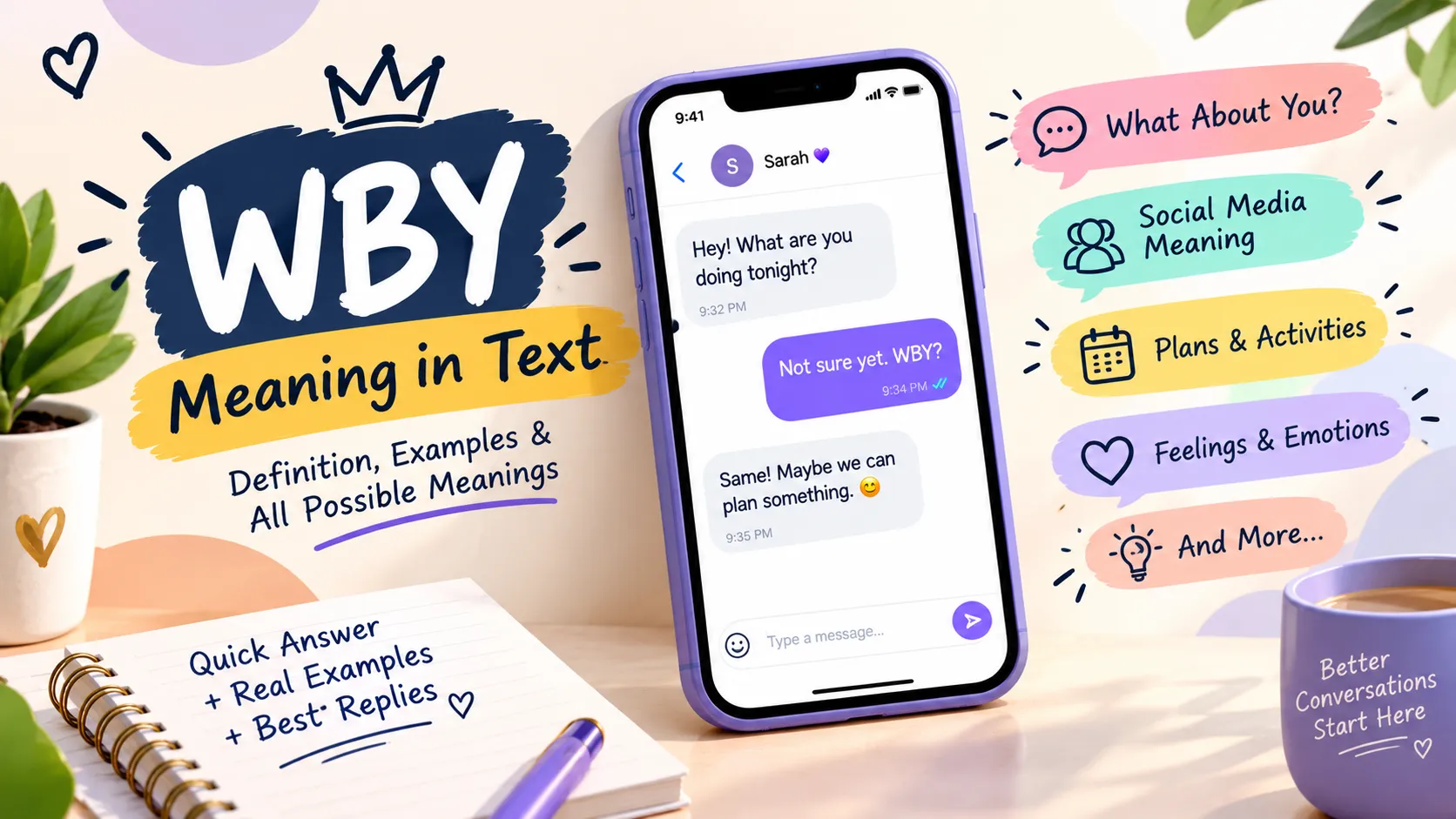
Related to Other Article: https://blesssprout.com/wby-meaning-in-text/
People Also Ask
A: TMB most commonly means “Text Me Back” in English texting. It is an informal way to ask someone to reply to a message or continue a conversation.
A: In everyday English texting, TMB stands for “Text Me Back.” Other interpretations, such as “Tag Me Back” or “Tweet Me Back,” depend on the conversation and are not equally likely in every situation.
A: It generally means “Text Me Back.” A guy may use it to continue a conversation, ask for information, or confirm a plan. It does not automatically mean he likes you romantically.
A: It usually means “Text Me Back.” A girl may use it to request a reply, continue a conversation, or get an answer about plans. Her tone depends on the situation, not just the abbreviation.
A: It can have that interpretation in a nostalgic or relationship-related context, but it is not the default meaning in ordinary English texting. Check the surrounding words before assuming that is what the sender intended.
Conclusion
TMB most commonly means “Text Me Back” in everyday English texting. It is a casual request for someone to reply, continue a conversation, or get back in touch.
Depending on the context, it can also mean “Tag Me Back” or “Tweet Me Back.” “Take Me Back” is a possible contextual interpretation, while lowercase tmb in Spanish messages commonly means también, or “also” and “too.”
When you encounter TMB, consider the surrounding message, the language, and the subject of the conversation before deciding what it means. If the intended meaning remains unclear, asking the sender is the simplest way to avoid a misunderstanding.