Introdution
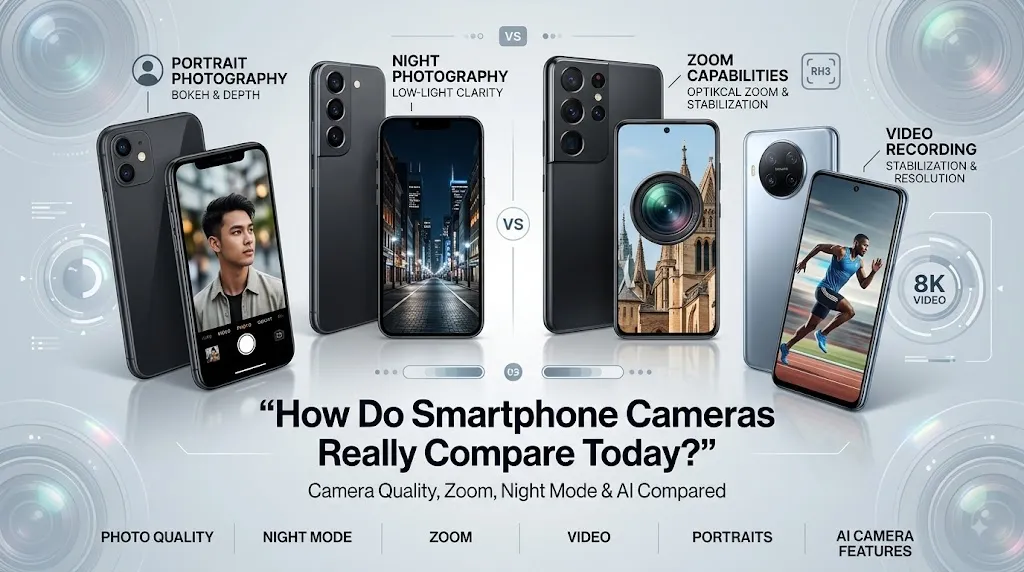
How Do Smartphone Cameras Really Compare Today: Smartphone cameras have become remarkably capable.
A phone in your pocket can now photograph a dark street, record stabilized 4K video, capture Distant subjects with dedicated telephoto hardware, and process several frames into a single finished photograph.
One phone has 200MP. Another has 50MP. Another has three 48MP cameras. One manufacturer advertises 100x zoom. Another focuses on computational photography and professional video.
The short answer is that camera quality is no longer determined by one specification.
That is why a 50MP camera can outperform a 200MP camera in some situations, while the 200MP camera may win in others.
Smartphone Camera Specs vs Real-World Image Quality
Consider two cameras with similar resolutions.
- sensors
- lenses
- image signal processors
- autofocus systems
- HDR algorithms
- noise-reduction techniques
- color processing
- stabilization systems
This distinction is one of the most important things to understand when comparing smartphone cameras.
Do More Megapixels Mean Better Photos?
No.
Megapixels describe the number of pixels captured by the image sensor.
They can be valuable for:
- cropping
- large prints
- high-resolution modes
- fine-detail photography
- editing flexibility
But megapixels don’t automatically determine:
- dynamic range
- color accuracy
- low-light quality
- autofocus performance
- motion capture
- video quality
Samsung’s Galaxy S26 Ultra is a useful example. It has a 200MP wide camera, but Samsung pairs that resolution with a wide f/1.4 aperture, dedicated telephoto cameras, and computational processing.
Why Sensor Size Matters More Than You Think
Sensor size is one of the most useful specifications to understand.
A larger sensor can generally collect more light, which can help with:
- low-light photography
- noise control
- dynamic range
- shadow detail
- image quality
Smartphones have physical size limitations, so manufacturers increasingly use computational photography to compensate for the limitations of small mobile camera systems.
Computational Photography: The Secret Behind Modern Phone Cameras
Research into mobile computational photography identifies technologies such as burst photography, noise reduction, and super-resolution as important elements of modern mobile imaging.
In practical terms, computational photography can help improve:
- HDR
- night photography
- detail
- noise
- skin tones
- portrait separation
- zoom
- exposure
- white balance
The phone’s processor and software decide how much of that information becomes the final photograph.
How Smartphone Cameras Compare in Daylight
Daylight is the easiest Environment for modern smartphones.
The more useful comparison is how they handle:
- highlights
- shadows
- skin tones
- fine textures
- colors
- sharpening
- autofocus
- exposure
A good daylight camera should not simply make a photograph look brighter and more colorful.
How Smartphone Cameras Compare at Night
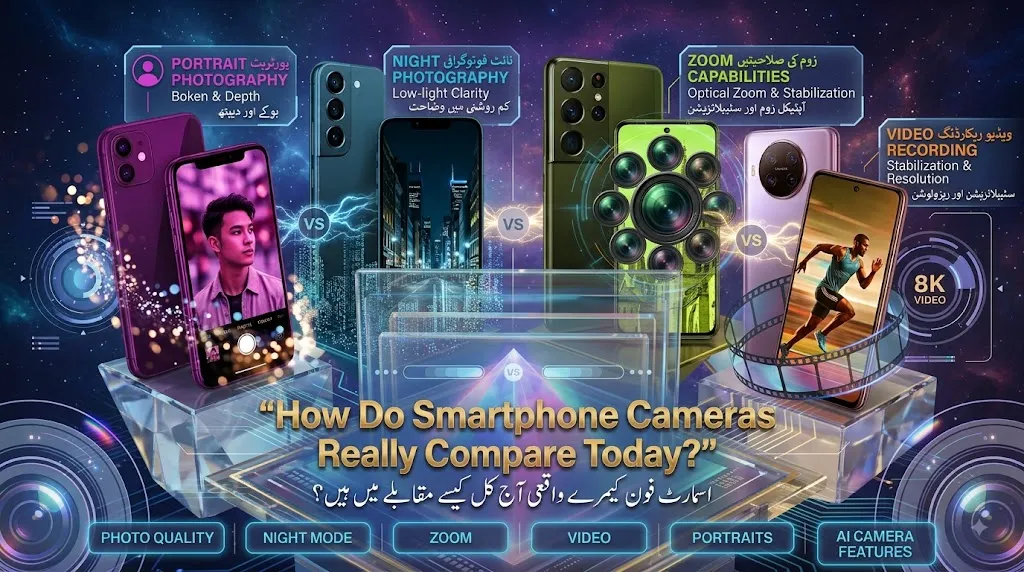
Night photography separates good smartphone cameras from merely impressive specifications.
When evaluating night photography, don’t only ask:
Ask:
- Is detail preserved?
- Are highlights controlled?
- Are colors realistic?
- Is there excessive sharpening?
- Is noise reduction destroying texture?
- Does movement create blur?
- Are faces still natural?
Samsung emphasizes wider apertures and Nightography processing on the Galaxy S26 Ultra. Samsung says its f/1.4 main camera provides improved brightness for low-light video, combined with noise reduction.
Portrait Photography: Which Camera Approach Works Best?
Portrait quality depends on much more than a “Portrait Mode” button.
A good portrait system needs:
- accurate autofocus
- good skin tones
- natural contrast
- convincing depth separation
- accurate subject edges
- attractive focal lengths
- controlled sharpening
Artificial background blur can look impressive in simple scenes but fail around:
- hair
- glasses
- hands
- complex clothing
- objects near the subject
The best portrait camera is therefore the one that Produces natural separation rather than simply the strongest blur.
Moving Subjects and Autofocus
A camera can produce a beautiful landscape while struggling badly with a running child or pet.
Movement tests reveal a lot about smartphone camera quality.
Look for:
- autofocus speed
- subject tracking
- shutter response
- exposure consistency
- motion processing
- stabilization
A camera’s megapixel count cannot tell you whether it will capture your child’s face sharply while they are running across a room.
Smartphone Cameras for Video
Apple’s iPhone 17 Pro supports advanced recording features including 4K Dolby Vision up to 120fps, ProRes up to 4K/120fps with external recording, ProRes RAW, Apple Log 2 and Genlock support.
Samsung’s Galaxy S26 Ultra focuses on stabilization, Nightography video, and low-light processing. Its Super Steady system also uses sensors and stabilization technology to keep footage level during movement.
Google’s Pixel 10 Pro offers Video Boost and video capabilities extending to 8K, alongside computational imaging features.
Related to Other Article: https://blesssprout.com/luxury-vs-budget-cars-what-matters-most/
iPhone vs Samsung vs Google Pixel Cameras
Each manufacturer has a different imaging philosophy.
iPhone 17 Pro: Strong Professional Video
The iPhone 17 Pro is particularly compelling for people who prioritize:
- professional video
- consistent results
- stabilization
- color workflows
- advanced recording formats
- content creation
Apple’s professional video feature set is unusually extensive for a smartphone.
Galaxy S26 Ultra: Hardware and Versatility
The Galaxy S26 Ultra is particularly attractive for people who want:
- very high resolution
- multiple focal lengths
- powerful zoom
- telephoto flexibility
- AI-assisted processing
- extensive camera controls
Its rear system includes 200MP wide, 50MP ultrawide, and 50MP telephoto hardware, plus a 3x telephoto.
Related to Other Article: https://blesssprout.com/smartphone-trends-that-will-shape-2026-and-beyond/
People Also Ask
A: Yes. Improvements in sensors, lenses, processors, stabilization, computational photography, and AI have made modern smartphone cameras substantially more capable.
A: A 200MP camera can provide excellent resolution and cropping flexibility, but sensor size, optics, processing, and stabilization can have a major impact on final image quality.
A: For many aspects of image quality, sensor size can be more meaningful than megapixel count.
A: The iPhone 17 Pro family is particularly strong for professional video, the Galaxy S26 Ultra offers exceptional zoom and hardware versatility, and the Pixel 10 Pro is highly focused on computational photography and AI-assisted imaging.
A: For many video situations, stabilization, autofocus, exposure consistency, dynamic range, and processing are more important than simply having a high-resolution still-image sensor.
Conclusion
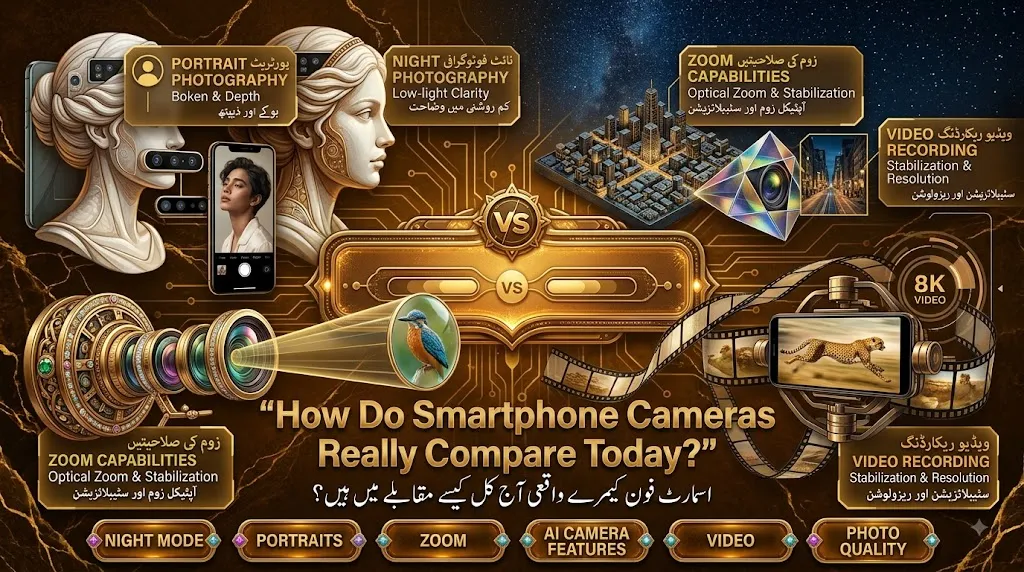
So, how do smartphone cameras really compare today? The answer goes far beyond megapixels. A great smartphone camera depends on the complete combination of sensor size, lens quality, aperture, OIS, autofocus, dynamic range, computational photography, zoom capability, and video processing.
The Galaxy S26 Ultra stands out for its high-resolution hardware and versatile zoom system; the iPhone 17 Pro is a strong choice for professional-quality video and consistent photography, while the Pixel 10 Pro focuses heavily on computational photography and AI-powered image processing.
The most important lesson is simple: don’t choose a smartphone camera based on one impressive specification. Think about what you actually photograph—family moments, travel, portraits, night scenes, wildlife, social-media content, or Professional video—and choose the camera system that performs best for your needs.