Introduction
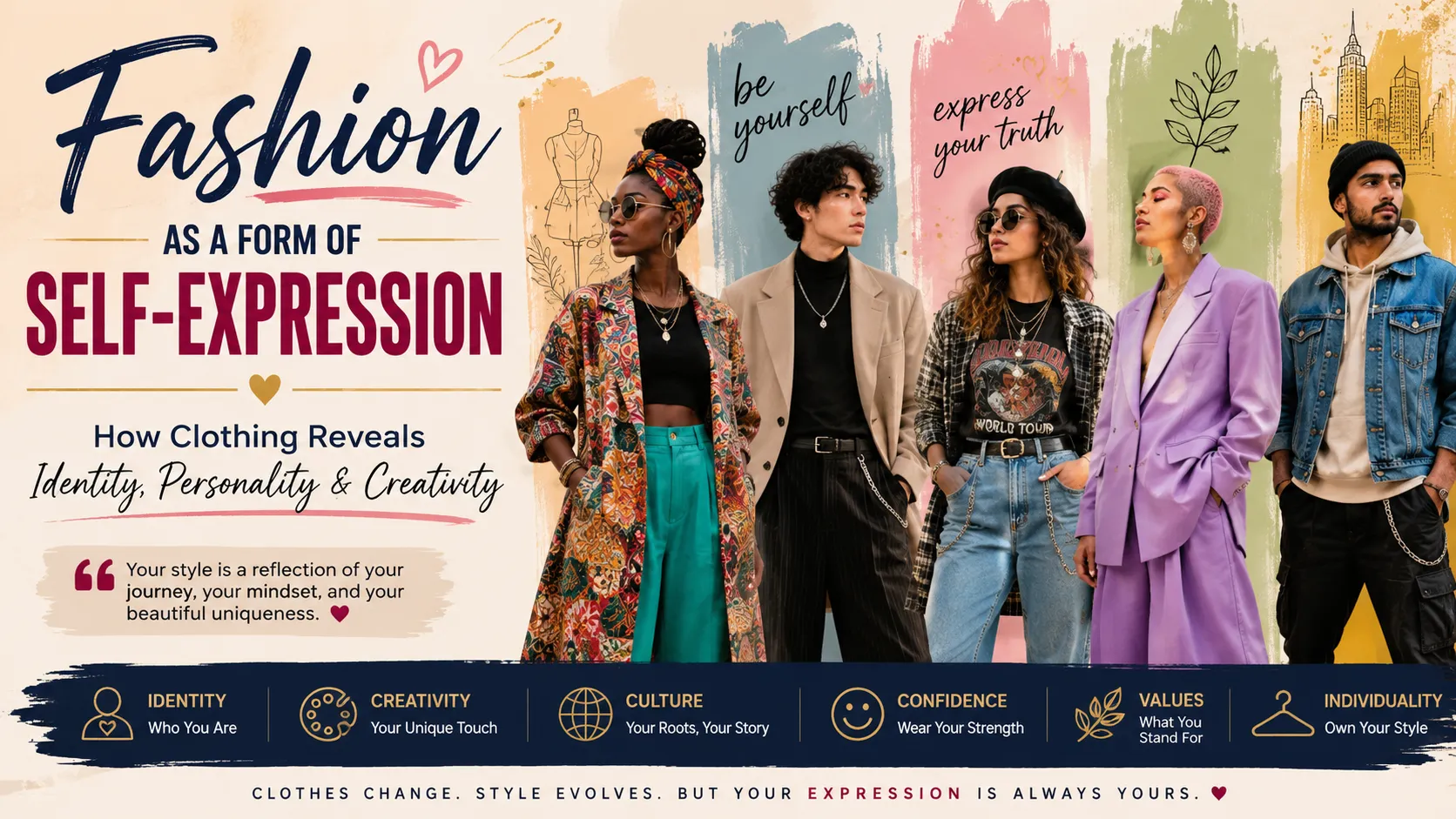
The colors you choose, the clothes you repeat, the accessories you treasure, the silhouettes you prefer, and even the way you combine unexpected pieces can become part of your Personal visual language.
That is why fashion as a form of self-expression matters.
Clothing can help people communicate identity, creativity, culture, mood, values, belonging, confidence, and individuality without having to explain themselves verbally. At the same time, fashion does not provide a perfect window into someone’s personality. What people wear is also influenced by culture, occupation, budget, weather, social expectations, comfort, available choices, and context.
What Does Fashion as a Form of Self-Expression Mean?
A person may use minimal clothing to create an understated aesthetic. Someone else may use bold colors, unusual accessories, vintage garments, or experimental silhouettes to express creativity.
15 Ways Fashion Can Express Who You Are
- Your clothing can reflect your aesthetic preferences.
- Your favorite colors can become part of your visual identity.
- Accessories can communicate individuality.
- Vintage pieces can express appreciation for history.
- Cultural clothing can celebrate heritage.
- Customized garments can showcase creativity.
- Minimalist outfits can communicate an understated aesthetic.
- Statement pieces can create visual impact.
- Comfortable clothing can prioritize authenticity over approval.
- Sustainable choices can reflect personal values.
- Mixing styles can show experimentation.
- Signature pieces can make your style recognizable.
- Repeating favorite silhouettes can create consistency.
- Unexpected combinations can communicate creativity.
- Your wardrobe can evolve as your identity evolves.
Why Is Fashion a Powerful Form of Self-Expression?
Current fashion culture increasingly celebrates this individuality. Recent coverage of Copenhagen street style, for example, highlights authenticity, eclectic combinations, vintage pieces, and personal creativity rather than simple conformity to luxury fashion.
15 Ways Fashion Can Give You Freedom
- Wear what genuinely interests you.
- Experiment without needing permanent commitment.
- Combine old and new pieces.
- Turn basic clothing into something personal.
- Use accessories to change an outfit.
- Explore different aesthetics.
- Develop a signature color.
- Create your own styling rules.
- Reject trends that don’t suit you.
- Adapt fashion to your lifestyle.
- Express creativity without spending excessively.
- Use clothing to celebrate meaningful memories.
- Let your style change naturally.
- Dress for yourself as well as your audience.
- Treat your wardrobe as a creative space.
How Fashion Communicates Identity Without Words
A tailored outfit may be appropriate for a professional environment. A vintage jacket may reveal an aesthetic preference. Traditional clothing may communicate cultural belonging. A customized shirt might reveal creativity.
15 Identity Signals Fashion Can Help Communicate
- Individuality
- Cultural connection
- Creativity
- Professional identity
- Lifestyle
- Aesthetic preferences
- Community belonging
- Personal values
- Nostalgia
- Confidence
- Practicality
- Rebellion
- Simplicity
- Experimentation
- Self-image
Fashion and Personal Identity
Someone might wear structured clothing at work and oversized streetwear on their days off. Both can be authentic expressions of the same person.
15 Ways Clothing Can Support Identity
- Reflect your current lifestyle.
- Celebrate important parts of your background.
- Support professional roles.
- Express hobbies and interests.
- Show creative preferences.
- Preserve meaningful memories.
- Explore new versions of yourself.
- Connect you with communities.
- Help you feel comfortable in social settings.
- Mark important life transitions.
- Communicate personal priorities.
- Celebrate cultural traditions.
- Create a recognizable visual identity.
- Adapt to different environments.
- Give you room to evolve.
The Psychology Behind Fashion and Self-Expression
A structured outfit might help someone feel prepared for an important meeting. Comfortable clothing may make another person feel relaxed. A favorite garment can carry emotional memories.
15 Psychological Functions Fashion Can Serve
- Supporting confidence
- Encouraging creativity
- Creating a sense of readiness
- Reinforcing identity
- Providing comfort
- Supporting self-presentation
- Creating emotional associations
- Encouraging experimentation
- Marking transitions
- Strengthening belonging
- Expressing values
- Supporting individuality
- Helping people feel prepared
- Creating personal rituals
- Exploring different identities
How Colors Express Mood and Personality
Cultural Background, personal memories, context, and individual preference can change how colors are experienced.
15 Ways to Use Color for Self-Expression
- Build a recognizable color palette.
- Use neutrals for understated outfits.
- Add one bright accent to a simple look.
- Experiment with monochromatic dressing.
- Combine complementary colors.
- Explore earthy tones.
- Use pastels for softer visual combinations.
- Try unexpected color pairings.
- Repeat one color through accessories.
- Match color to the occasion.
- Use color to distinguish different style moods.
- Explore cultural meanings of color.
- Wear colors you genuinely enjoy.
- Photograph outfits to study your palette.
- Change your palette as your style evolves.
The Role of Accessories in Self-Expression
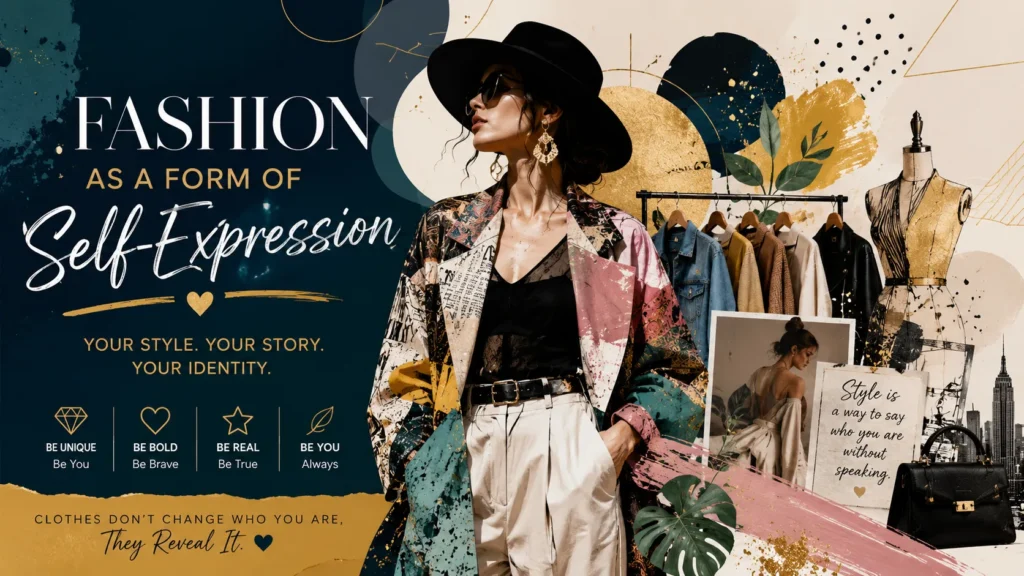
Accessories are also useful because they allow experimentation without requiring a completely new wardrobe.
15 Accessories That Can Strengthen Personal Style
- Watches
- Rings
- Necklaces
- Earrings
- Bracelets
- Sunglasses
- Scarves
- Belts
- Hats
- Handbags
- Backpacks
- Brooches
- Hair accessories
- Statement shoes
- Personalized jewelry
How Fabrics, Patterns and Textures Tell a Story
Denim can create a casual character. Linen can feel relaxed and natural. Wool can communicate warmth and structure. Leather can create a stronger visual impression. Knitwear can introduce softness.
15 Ways Texture and Pattern Create Expression
- Use texture to add depth.
- Mix smooth and rough materials.
- Combine simple pieces with statement prints.
- Experiment with stripes.
- Try checks and plaids.
- Explore floral patterns.
- Use graphic prints.
- Incorporate traditional motifs.
- Layer different fabrics.
- Contrast lightweight and heavy materials.
- Use texture in monochromatic outfits.
- Experiment with patterned accessories.
- Let one print become the focal point.
- Combine subtle patterns carefully.
- Choose fabrics that feel authentic to you.
Related to Other Article: https://blesssprout.com/short-birthday-captions-for-yourself-aesthetic/
Fashion as a Form of Gender and Personal Expression
Modern fashion gives people more freedom to experiment with silhouettes, tailoring, colors, layering, and garments that were historically associated with specific gender categories.
15 Ways Fashion Can Support Personal Expression
- Experiment with silhouettes.
- Choose clothing based on comfort.
- Explore different tailoring styles.
- Mix traditionally masculine and feminine elements.
- Experiment with accessories.
- Try different proportions.
- Build outfits around personal preference.
- Ignore unnecessary fashion policing.
- Dress appropriately for your context.
- Explore new aesthetics gradually.
- Allow your style to evolve.
- Separate identity from stereotypes.
- Use fashion to explore creativity.
- Choose what makes you feel authentic.
- Let personal comfort guide your choices.
Fashion as a Form of Creativity
Every time you choose proportions, textures, colors, accessories, or combinations, you’re making aesthetic Decisions.
15 Creative Fashion Experiments
- Create a monochromatic outfit.
- Style one item three different ways.
- Mix vintage with contemporary clothing.
- Build an outfit around one accessory.
- Try an unexpected color combination.
- Experiment with layering.
- Combine contrasting textures.
- Restyle an old garment.
- Create a capsule wardrobe challenge.
- Wear one color in different shades.
- Style formal clothing casually.
- Style casual clothing more formally.
- Create a personal uniform.
- Build an outfit inspired by an artwork.
- Create a look around a meaningful memory.
Sustainable Fashion as Self-Expression
Choosing secondhand clothing, repairing garments, rewearing favorites, supporting artisans, buying fewer pieces, or customizing existing clothing can communicate a different relationship with fashion.
15 Ways Sustainable Fashion Can Become Personal
- Shop secondhand.
- Rewear favorite pieces.
- Repair damaged garments.
- Customize existing clothing.
- Explore vintage stores.
- Buy fewer but more useful pieces.
- Support local craftspeople.
- Learn basic clothing care.
- Swap clothes with friends.
- Repurpose unused garments.
- Avoid impulse purchases.
- Build outfits around existing pieces.
- Choose quality when practical.
- Learn where your clothes come from.
- Develop a wardrobe that reflects your values.
Related to Other Article: https://blesssprout.com/brother-captions-for-instagram-funny-cute/
People Also Ask
A: Yes. Fashion can communicate aspects of identity, creativity, culture, values, lifestyle, and personal preference. Clothing does not reveal someone’s entire personality, but it can be an important form of visual self-presentation.
A: Fashion can express personality through colors, silhouettes, patterns, accessories, styling habits, and aesthetic preferences. However, these associations are not absolute; context and personal circumstances matter.
A: Fashion is visible, flexible, and part of everyday life. It allows people to communicate aspects of themselves without necessarily explaining them verbally.
A: Clothing can reflect identity by representing cultural background, lifestyle, community, personal aesthetics, professional roles, values, and individual preferences.
A: Clothing that fits well and feels authentic can support confidence and positive self-perception. However, healthy confidence should not depend entirely on appearance.
Conclusion
Fashion is more than following trends or wearing attractive clothes—it is a powerful way to express who you are. From colors and silhouettes to accessories, fabrics, cultural influences, and personal styling, every choice can become part of your unique visual language.
Fashion as a form of self-expression gives you the freedom to Communicate your personality, creativity, values, identity, and individuality without saying a word. You don’t need expensive brands or a perfectly curated wardrobe to express yourself. What matters most is choosing pieces that feel authentic to you.
Your personal style can change as you grow, experience new things, discover new interests, and understand yourself better. That evolution is not a weakness—it is part of self-expression.











1 thought on “Fashion As A Form of Self-Expression: Style, Identity & Personality”