Introduction
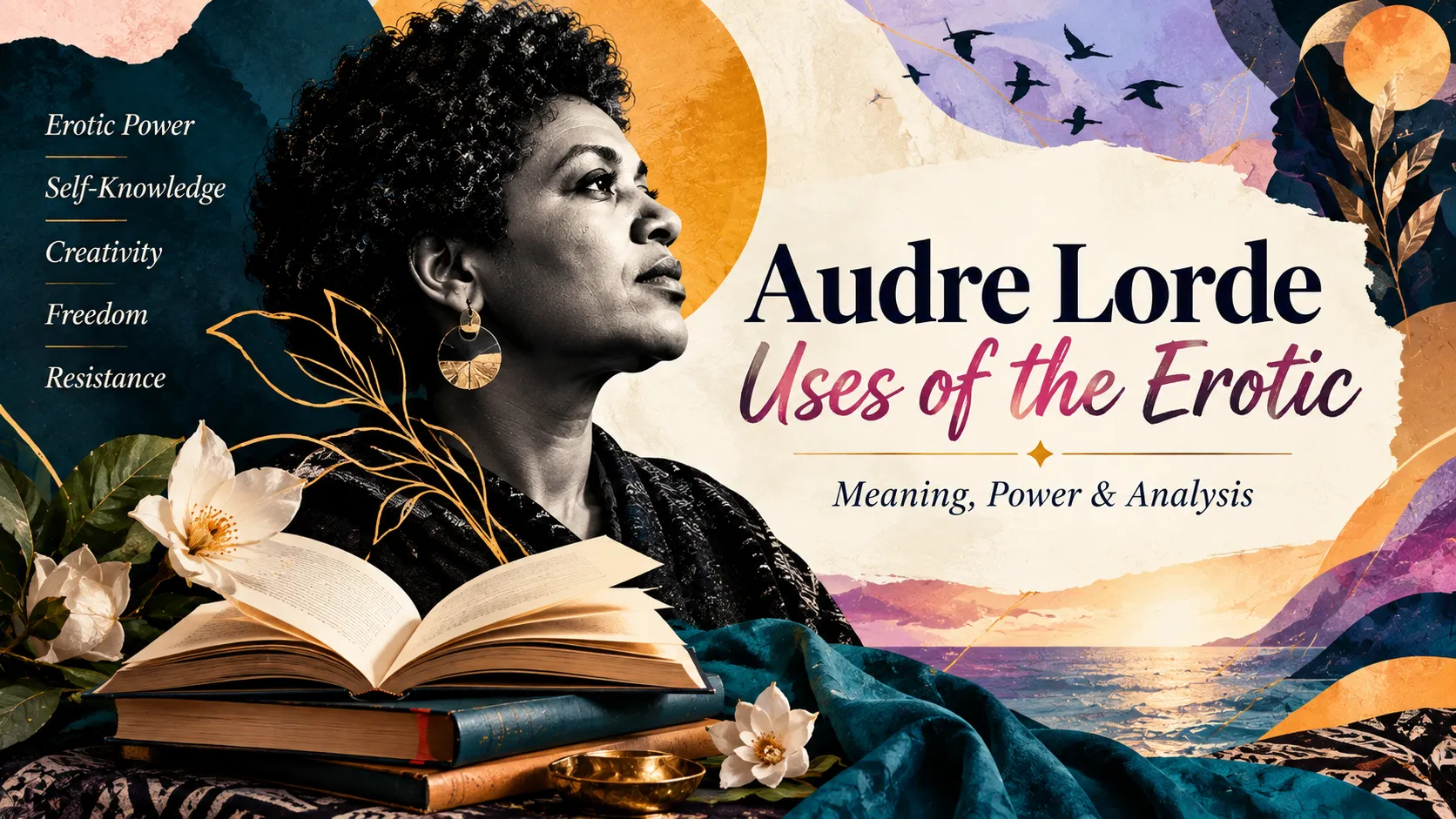
Audre Lorde Uses Of The Erotic: Audre Lorde’s “Uses of the Erotic” is one of the most influential essays on power, self-knowledge, creativity, and liberation in feminist thought. First published in 1978 and later included in Sister Outsider, the essay challenges the common idea that the erotic is simply about sexuality. For Lorde, the erotic represents a deeper source of feeling, knowledge, Satisfaction, connection, and personal power.
In this essay, Audre Lorde explains how recognizing and embracing the erotic can help people understand what genuinely fulfills them. She also draws an important distinction between the erotic and pornography, arguing that pornography reduces or distorts desire while the erotic can connect people with deeper feelings and creative energy.
What Is Audre Lorde’s “Uses of the Erotic” About?
Lorde’s essay examines how deep emotional and physical feeling can become a source of personal knowledge and power. She challenges the idea that pleasure and emotion should be separated from serious intellectual or political life.
- Deep feeling can become a powerful form of knowledge.
- The erotic is more than desire; it is a way of knowing yourself.
- What fulfills you can teach you what truly matters.
- Pleasure can reveal parts of yourself that silence cannot.
- Feeling deeply is not weakness; it can become strength.
- Your inner knowledge can challenge the limits placed on you.
- The erotic begins where genuine feeling meets awareness.
- Knowing what moves you can change how you live.
- Meaningful satisfaction can become a source of courage.
- The deepest truths are not always discovered through logic alone.
- Your feelings can help you recognize what deserves your energy.
- Self-awareness begins when you listen to your deeper experiences.
- The erotic connects feeling with purpose and possibility.
- What makes you feel alive can reveal what matters most.
- Lorde turns deep feeling into a language of power.
Who Was Audre Lorde and Why Is Her Work Important?
Audre Lorde was a Black lesbian feminist poet, writer, teacher, and activist. Her work explored racism, sexism, sexuality, identity, difference, creativity, and resistance.
- Audre Lorde transformed personal experience into powerful political thought.
- Her writing challenged silence around difference and identity.
- Lorde believed that difference could become a source of strength.
- Her work connected poetry, feminism, identity, and resistance.
- She questioned systems that taught people to silence themselves.
- Lorde made emotional truth part of serious intellectual conversation.
- Her feminism recognized the complexity of women’s experiences.
- She wrote about power without reducing it to domination.
- Her work encouraged people to speak from lived experience.
- Lorde’s ideas continue to influence feminist scholarship.
- Her writing connects Individual freedom with collective change.
- She treated creativity as an important form of resistance.
- Her work continues to challenge comfortable assumptions.
- Lorde’s voice remains influential across feminist and queer studies.
- Her legacy shows how language can become a tool for liberation.
When Did Audre Lorde Write “Uses of the Erotic”?
Lorde presented “Uses of the Erotic: The Erotic as Power” in 1978 at the Fourth Berkshire Conference on the History of Women. The essay was later published in her influential collection Sister Outsider.
- Lorde’s 1978 essay challenged conventional ideas about female sexuality.
- The essay emerged during important feminist debates about power.
- Lorde questioned who gets to define women’s experiences.
- Her argument connected private feelings with public politics.
- The historical context makes the essay’s language especially significant.
- Lorde wrote during a period of major feminist transformation.
- Her ideas challenged narrow definitions of liberation.
- The essay became part of her larger feminist intellectual legacy.
- Lorde connected personal experience with social structures.
- Her work questioned the separation between emotion and politics.
- The essay remains relevant because its central questions endure.
- Lorde’s historical moment shaped her understanding of power.
- Her writing responded to cultural attempts to control women’s experiences.
- The essay became an important part of Sister Outsider.
- Its influence continued far beyond the decade in which it appeared.
What Does Lorde Mean by “The Erotic”?
Lorde uses the erotic in a much broader sense than sexual desire. She describes it as a deep source of feeling, satisfaction, connection, creativity, and knowledge.
- The erotic is a deep experience of feeling fully alive.
- It can connect pleasure with self-knowledge.
- The erotic reaches beyond simple physical desire.
- It can exist in creativity, relationships, work, and reflection.
- Lorde treats deep satisfaction as meaningful knowledge.
- The erotic helps people recognize what truly fulfills them.
- It connects emotional experience with personal agency.
- The erotic can reveal desires that society teaches us to ignore.
- It creates space for deeper connection with yourself.
- The erotic is about meaningful experience, not impulse alone.
- It can transform private feeling into conscious awareness.
- Lorde presents the erotic as an internal source of energy.
- It allows people to recognize experiences that nourish them.
- The erotic combines feeling, awareness, and possibility.
- For Lorde, the erotic can become a path toward freedom.
How Does Lorde Define the Erotic as Power?
Power is at the center of Lorde’s argument. She suggests that people can reclaim strength by recognizing and valuing the deep experiences they have been taught to suppress.
- The erotic becomes power when you stop denying your deepest feelings.
- Knowing yourself can make external control less powerful.
- Personal fulfillment can strengthen your sense of agency.
- Deep awareness can become a foundation for resistance.
- Power can begin with recognizing what truly matters to you.
- The erotic challenges the belief that pleasure makes people weak.
- Self-knowledge can become a powerful form of independence.
- Reclaiming feeling can mean reclaiming a part of yourself.
- Inner awareness can influence Outward action.
- The erotic gives language to a different kind of power.
- True power does not always require control over others.
- Personal satisfaction can expose the limits of oppression.
- Deep feeling can create energy for meaningful change.
- Reclaimed desire can become reclaimed agency.
- Lorde transforms pleasure from something private into something powerful.
How Is the Erotic Connected to Knowledge and Self-Awareness?
Lorde challenges the idea that knowledge must always come from detached reasoning. She gives serious importance to feeling and embodied experience as ways of understanding ourselves and our lives.
- Feeling can teach you things that explanation cannot.
- Self-awareness grows when you pay attention to meaningful experiences.
- Your reactions can reveal what you value.
- Deep satisfaction can become a form of personal knowledge.
- Emotional awareness can help identify unmet needs.
- Knowing what feels meaningful can guide better choices.
- Feelings can provide clues about your relationship with the world.
- The erotic encourages honest attention to inner experience.
- Self-knowledge becomes stronger when feeling is not ignored.
- Emotional truth can challenge assumptions imposed from outside.
- Your experiences can become sources of understanding.
- Awareness begins when you stop dismissing your own feelings.
- The erotic connects inner experience with conscious reflection.
- Knowing yourself can change how you respond to society.
- Deep feeling can become knowledge when examined honestly.
What Is the Difference Between the Erotic and the Pornographic?
Lorde makes an important distinction between the erotic and the pornographic. Her concept of the erotic emphasizes depth, feeling, fulfillment, and connection rather than reducing experience to sensation.
- The erotic involves depth rather than sensation alone.
- Lorde does not reduce erotic experience to sexual stimulation.
- The erotic connects pleasure with emotional meaning.
- Pornographic representation can separate sensation from deeper feeling.
- Lorde’s distinction is about meaning as much as sexuality.
- The erotic recognizes the whole experience rather than one sensation.
- Genuine fulfillment involves more than physical response.
- Lorde treats emotional depth as central to erotic experience.
- The erotic can involve creativity and connection.
- Pornography and erotic experience are not Interchangeable concepts for Lorde.
- Her distinction challenges simplified ideas about sexual pleasure.
- The erotic involves awareness of what an experience means.
- Meaningful connection gives the erotic greater depth.
- Lorde uses this distinction to discuss power and self-awareness.
- Understanding the difference clarifies her larger argument.
How Does the Erotic Influence Joy and Deep Satisfaction?
Joy plays an important role in Lorde’s argument because genuine satisfaction can reveal what makes life meaningful. She encourages readers to take fulfillment seriously instead of treating it as unnecessary or superficial.
- Joy can reveal what makes life feel meaningful.
- Deep satisfaction deserves more than casual attention.
- Feeling fulfilled can change how you understand yourself.
- Joy can become a reminder of what you value.
- Meaningful pleasure can strengthen emotional awareness.
- A fulfilling experience can show you what deserves more space.
- Joy is not automatically a distraction from serious life.
- Deep satisfaction can challenge a culture of constant exhaustion.
- The erotic invites people to recognize genuine fulfillment.
- Joy can become a source of creative energy.
- Satisfaction can help people identify what they have been missing.
- Meaningful pleasure can create a stronger sense of connection.
- Feeling alive can become a form of self-discovery.
- Lorde treats joy as something worth protecting.
- Deep satisfaction can remind us that survival is not the whole story.
What Is the Connection Between the Erotic and Creativity?
Lorde connects the erotic with creative energy. When people become more aware of their deepest feelings, those feelings can fuel writing, art, imagination, intellectual work, and other forms of expression.
- Creativity grows when deep feeling has room to breathe.
- The erotic can turn emotion into creative energy.
- Art can become a language for experiences words cannot contain.
- Creative work can reveal parts of yourself you did not know.
- Deep feeling can inspire imagination.
- The erotic can make creative expression more meaningful.
- Creativity allows inner experience to become visible.
- A powerful feeling can become the beginning of a poem.
- Artistic expression can transform private experience into connection.
- The erotic encourages people to create rather than merely consume.
- Creativity can become an expression of personal freedom.
- Meaningful creation begins with paying attention to what moves you.
- Art can carry emotional knowledge into the world.
- Creative energy becomes stronger when authentic feeling is respected.
- The erotic and creativity meet where feeling becomes expression.
How Does the Erotic Relate to Work and Fulfillment?
Lorde extends her argument beyond relationships and sexuality into everyday work. She asks readers to consider whether their work simply consumes their energy or allows them to experience meaningful engagement.
- Meaningful work can create a deeper sense of fulfillment.
- Work does not have to be separated from human feeling.
- Creativity can make ordinary work more meaningful.
- Your relationship with work can reveal your deeper values.
- Fulfillment matters even outside traditionally creative professions.
- Work becomes different when purpose enters the experience.
- Meaningful effort can produce satisfaction beyond a paycheck.
- The erotic challenges a life built entirely around obligation.
- Feeling connected to your work can change your experience of it.
- Creativity can exist inside everyday responsibilities.
- Work can become an expression of values and identity.
- A fulfilling task can remind you of your capabilities.
- Lorde asks readers to question what meaningful work feels like.
- Satisfaction can help reveal whether your work aligns with your values.
- Purpose can transform work from endurance into engagement.
Related to Other Article: https://blesssprout.com/happy-sunday-blessings/
How Does the Erotic Challenge Oppression?
Lorde connects the suppression of feeling with broader systems of oppression. When people learn to distrust their desires, joy, creativity, and emotional knowledge, they can become disconnected from their own sources of strength.
- Oppression can teach people to distrust their own experiences.
- Reclaiming feeling can challenge imposed limitations.
- Self-awareness can expose systems that deny human fulfillment.
- The erotic resists the idea that people should live disconnected from themselves.
- Deep feeling can reveal where life has become restrictive.
- Recognizing your needs can challenge expectations built around silence.
- Personal freedom begins partly with knowing what you need.
- Suppressed desire can become a sign of deeper social control.
- The erotic challenges cultures that reward emotional disconnection.
- Self-knowledge can make oppression easier to recognize.
- Creativity can become a form of resistance.
- Joy can challenge systems that depend on exhaustion and silence.
- Reclaiming pleasure can become an act of self-preservation.
- The erotic turns personal awareness toward larger questions of justice.
- Liberation includes the freedom to experience life deeply.
Why Does Lorde Connect the Erotic With Political Action?
For Lorde, personal awareness does not have to remain private. Once people understand what genuine fulfillment and freedom feel like, they can become more aware of the social conditions that prevent others from experiencing them.
- Personal awareness can become the beginning of political awareness.
- Knowing what freedom feels like can expose its absence.
- Deep feeling can motivate people to challenge injustice.
- The erotic can move from private experience toward collective action.
- Self-knowledge can create courage for resistance.
- Political action becomes personal when human dignity is involved.
- Shared experiences can build stronger communities.
- Meaningful connection can encourage people to act together.
- The erotic gives emotional depth to the pursuit of justice.
- Resistance becomes stronger when people know what they are protecting.
- Personal fulfillment can inspire concern for collective freedom.
- Political change requires people who believe different lives are possible.
- The erotic connects inner freedom with social possibility.
- Deep feeling can become energy for meaningful action.
- Lorde shows how personal experience can become politically significant.
How Are Spirituality, Connection, and the Erotic Related?
Lorde’s concept also has a spiritual dimension. She connects deep feeling with a sense of wholeness, connection, and meaning, showing that inner life cannot always be separated from social and political experience.
- Spiritual depth can begin with paying attention to meaningful feeling.
- The erotic can create a stronger sense of connection.
- Inner experience can influence how we relate to others.
- Meaningful connection can make life feel larger than individual experience.
- The erotic recognizes the value of embodied experience.
- Spiritual awareness can deepen self-understanding.
- Connection becomes powerful when it is rooted in authenticity.
- Deep feeling can create a sense of belonging.
- The erotic brings inner and outer life into conversation.
- Meaning can emerge through genuine connection with others.
- Self-awareness can strengthen empathy without erasing difference.
- The erotic encourages a fuller experience of being human.
- Connection can become a source of courage and understanding.
- Spirituality and political awareness do not have to exist separately.
- Lorde’s erotic invites a more complete understanding of human experience.
Why Is “Uses of the Erotic” Important to Black Feminist Thought?
Lorde’s essay is important to feminist thought because it challenges narrow definitions of power and recognizes feeling, difference, creativity, sexuality, and lived experience as intellectually and politically significant.
- Lorde expands the feminist meaning of power.
- Her work centers experiences often pushed to the margins.
- She challenges the idea that strength must look emotionally detached.
- Her theory connects identity with political consciousness.
- Difference becomes a source of knowledge rather than division.
- Black feminist thought benefits from multiple forms of lived experience.
- Lorde challenges systems that silence marginalized voices.
- Her work connects personal liberation with collective liberation.
- She makes room for complexity within feminist identity.
- Creativity becomes part of feminist resistance.
- Emotional knowledge receives intellectual importance.
- Her work challenges oppression across multiple dimensions.
- Lorde’s ideas encourage solidarity without erasing difference.
- The erotic becomes a language for agency and self-definition.
- Her legacy continues to shape conversations about feminism and power.
Related to Other Article: https://blesssprout.com/arouse-synonym/
Why Does Audre Lorde’s “Uses of the Erotic” Still Matter Today?
The essay remains relevant because modern life still often separates productivity from fulfillment, reason from emotion, and private experience from political reality. Lorde’s argument invites readers to reconsider those divisions.
- Deep feeling still matters in a culture built around constant productivity.
- People still struggle to recognize what genuinely fulfills them.
- Emotional awareness remains essential to meaningful self-understanding.
- Creativity still offers a way to resist emotional numbness.
- Lorde’s ideas remain relevant to conversations about identity.
- Her distinction between pleasure and exploitation remains valuable.
- The essay encourages people to question inherited expectations.
- Meaningful work remains an important part of human fulfillment.
- Personal freedom still depends partly on self-knowledge.
- Her ideas encourage deeper conversations about power.
- The relationship between pleasure and politics remains worth examining.
- Lorde’s work continues to inspire feminist readers and writers.
- Her emphasis on difference remains important in diverse communities.
- The erotic can still be understood as a source of creative energy.
- Lorde’s central message remains powerful: deep feeling can become power.
People Also Ask
A: Lorde argues that the erotic can be a source of deep feeling, knowledge, creativity, and power rather than being understood only as sexuality.
A: No. Sexuality is part of her discussion, but the erotic also includes creativity, joy, meaningful work, connection, spirituality, and deep satisfaction.
A: Erotic power refers to the strength that can come from recognizing and valuing deep feeling, satisfaction, self-knowledge, and personal agency.
A: Lorde distinguishes the erotic from pornography by emphasizing depth, feeling, connection, and fulfillment rather than sensation detached from deeper experience.
A: The essay is important because it connects personal feeling with knowledge, creativity, power, feminism, and resistance to oppression.
Conclusion
Audre Lorde’s “Uses of the Erotic” presents the erotic as much more than sexual desire. Lorde describes it as a deep source of feeling, knowledge, creativity, satisfaction, and personal power. By recognizing what genuinely fulfills us, we can better understand ourselves and become less willing to accept forms of work, relationships, and social conditions that deny our humanity.
One of the essay’s most important ideas is that the erotic can become a form of resistance. It helps people identify their needs, value their Experiences, and imagine a life beyond oppression. Lorde’s distinction between the erotic and the pornographic also shows why genuine emotional and creative fulfillment cannot be reduced to sexual imagery or consumption.











1 thought on “Audre Lorde Uses of the Erotic: Meaning & Analysis”